Dar es Salaam, Tanzania – 6 March 2026 – The United Nations Industrial Development Organization (UNIDO), in collaboration with the Vice President’s Office-Division of Environment and the Tanzania Renewable Energy Association (TAREA), organized a Technology Transfer and Entrepreneurship Acceleration Workshop in Dar es Salaam to promote Transfer of Innovative Bioenergy Technologies to enhance entrepreneurial opportunities in Tanzania’s clean cooking sector. The workshop brought together more than 40 participants including Government agencies, Entrepreneurs, technology providers, financial institutions and development partners to explore sustainable solutions for clean cooking and energy access.

The event focused on three bioenergy technologies with strong potential for local investment and manufacturing, including Ethanol Micro-distilleries (EMDs), portable Biogas digesters and Briquette/Pellet manufacturing from agricultural residues and wastes. These specific technologies would support waste to energy practices, create new business and job opportunities and contribute to Tanzania’s national targets for clean cooking.
Through the workshop, UNIDO and its partners aim to identify and support aspiring entrepreneurs and small and medium-sized enterprises interested in investing in local manufacturing of bioenergy solutions. This initiative is expected to generate a pipeline of viable business projects and facilitate connections between entrepreneurs, technology providers and financing institutions. By strengthening partnerships and promoting technology transfer, the programme seeks to accelerate support to Tanzania’s NDC-3.0 targets, protecting the environment, creating jobs and fostering inclusive economic growth.
This article is written by Alusaria Verande Nkya.
The Council on Ethanol Clean Cooking (CECC) is pleased to present its 2025 Annual Report, highlighting a year of strategic progress toward expanding access to modern, sustainable clean cooking solutions.
While ethanol remains a core focus, CECC’s work in 2025 advanced a broader portfolio of clean cooking pathways including bioethanol, biogas, carbon finance mechanisms, integrated fuel-mix strategies, and decentralized production models. Through technical dialogue, policy engagement, and knowledge products, the Council continues to support developing countries in building resilient, locally anchored clean cooking ecosystems.
The Council on Ethanol Clean Cooking (CECC) has been officially recognized as a Climate Action Solution under the United Nations Framework Convention on Climate Change (UNFCCC) and is now listed on NAZCA – the Non-State Actor Zone for Climate Action, UNFCCC’s Global Climate Action Portal.
NAZCA (Non-State Actor Zone for Climate Action) is the UN Climate Change transparency hub for non-Party stakeholders and a central pillar of the Global Climate Action Agenda. The portal was created in recognition that addressing climate change requires ambitious, coordinated action across all segments of society, including governments, regions, cities, companies, investors, civil society, and voluntary initiatives.
NAZCA provides a global online platform that showcases climate actions, commitments, plans, inventories, and progress reported by a wide range of actors, offering a clear and comprehensive view of global climate action beyond national governments.
CECC’s recognition as a Climate Action Solution under NAZCA underscores its contribution to the Global Climate Action Agenda, highlighting the importance of clean cooking in delivering climate mitigation, health, gender, and development co-benefits. It also reinforces CECC’s commitment to transparency, collaboration, and scaling practical solutions that support countries in achieving their climate and sustainable development goals.
25 November 2025 — Clean cooking is moving rapidly up the global development and climate agenda, with new evidence showing how finance, industrial value chains and technology policy can work together to deliver scale. A webinar hosted by the United Nations Industrial Development Organization (UNIDO) and the Council on Ethanol Clean Cooking (CECC), experts presented three new publications aimed at unlocking investment and accelerating universal access to clean and modern cooking solutions
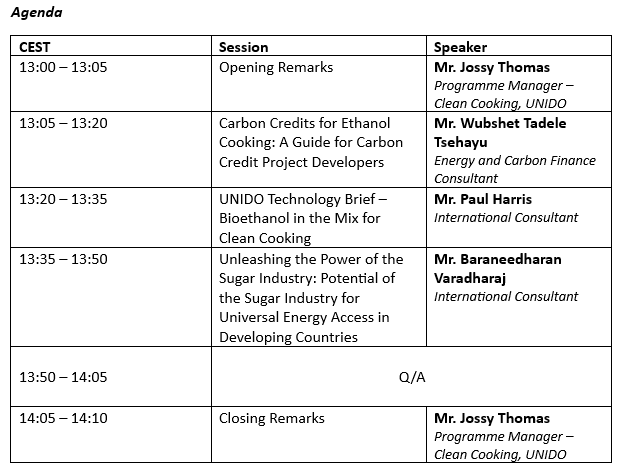
Opening the session, Jossy Thomas, Programme Manager for Clean Cooking at UNIDO, underscored that clean cooking is now recognized as both a development priority and a human rights issue. He noted that the issue has gained strong political momentum globally, including at the G20 level, and that 98 low- and middle-income countries have now integrated clean cooking or household energy goals into their Nationally Determined Contributions (NDCs). The webinar showcased the findings of three recent UNIDO–CECC publications addressing carbon finance, clean cooking transition strategies, and the industrial role of the sugar sector in scaling clean energy access.
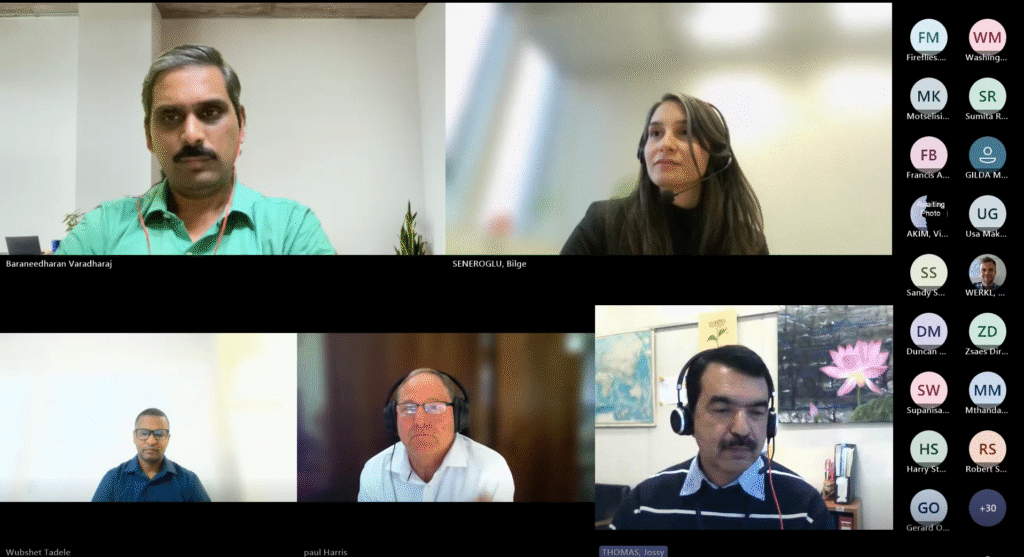
Presenting the first publication, carbon finance expert Wubshet Tadele Tsehayu highlighted that while ethanol has proven to be a clean, renewable and widely accepted cooking fuel, access to finance remains one of the most critical bottlenecks for market scale-up, particularly for small and medium enterprises in Africa.
The guide assesses how carbon finance can serve as a results-based revenue stream to strengthen the commercial viability of ethanol cooking businesses. Although voluntary carbon markets have grown in recent years, Africa still accounts for only about 16% of global carbon credit issuance, with clean cooking representing a very small share of that total.
To address high transaction costs and technical barriers, the publication proposes an aggregator-based carbon finance model, where multiple small projects are bundled under a single coordination entity for certification, monitoring, and verification. This approach significantly lowers entry barriers and improves risk-sharing for small enterprises.
“Carbon finance is not a silver bullet, but it is a critical complementary revenue source that can unlock private investment and improve business sustainability,” Tsehayu emphasized during the presentation
In the second presentation, Paul Harris, CEO of Integrated Energy Solutions and lead author of the Technical Brief, examined the large-scale feasibility of three clean cooking pathways: electricity, liquefied petroleum gas (LPG), and bioethanol.
Harris placed the challenge in stark numerical terms: more than 400 million households worldwide still rely on polluting cooking fuels. Achieving universal access within 15 years would require converting roughly 27 million households every year. At this scale, he argued, only electricity, LPG and bioethanol currently have the capacity for rapid mass deployment.
However, each technology comes with structural constraints. Electric cooking faces grid reliability challenges, rising evening peak demand, and high upstream generation and storage costs. LPG, while widely used, carries import dependence, foreign exchange exposure, and global price volatility. Bioethanol offers strong local production and renewable advantages, but requires new industrial supply chains and coordinated investment.
“No single fuel can meet national needs on its own,” Harris noted. “Every country will need all three options in parallel, carefully planned and sequenced.”
The brief emphasizes the importance of national fuel-mix planning, aligned with grid expansion strategies, infrastructure investment and affordability mechanisms for low-income households.
The third publication was presented by energy and climate finance specialist Baraneedharan Varadharaj, who focused on the significant but underutilized clean energy potential of the sugar sector, particularly in Southern Africa. The analysis shows that while the region performs strongly in sugar production and agricultural yields, a large share of its potential for bioethanol production, bagasse-based cogeneration and waste-to-energy remains untapped. On average, only about half of available cogeneration capacity in sugar mills is currently exploited, and substantial bioethanol production potential remains unused.
Varadharaj estimated that up to USD 6 billion in new investment would be required to fully unlock the clean energy contribution of the sugar sector. If mobilized, such investment could significantly expand domestic ethanol supply for clean cooking and fuel blending, increase renewable electricity generation, reduce fossil fuel imports and greenhouse gas emissions, and stimulate rural employment and industrial value-chain development. He stressed the importance of integrating the sugar sector more systematically into national climate strategies and NDC implementation frameworks, as well as the need for dedicated regional investment platforms to reduce risks for private investors.
The discussion following the presentations reinforced the message that achieving universal access to clean cooking will require coordinated government leadership, strong public–private partnerships and the alignment of industrial policy, climate finance and energy planning. Speakers emphasized that clean cooking should not be treated as a standalone energy issue but as a cross-cutting driver of public health, gender equality, climate mitigation and inclusive industrial development.
Closing the webinar, Jossy Thomas reaffirmed CECC’s role as a global multi-stakeholder platform supporting countries with practical tools, policy guidance and investment-ready research. He also noted that all three publications presented at the webinar are now freely available to support governments, development partners and private sector actors in translating evidence into concrete action. He concluded that the clean cooking transition will only succeed if complete ecosystems are built, linking fuel production, technology deployment, financing and coherent policy coordination at national and regional levels.
Watch the full webinar recording here: From Research to Action Insights from Recent UNIDO and CECC Publication
Access to clean cooking remains one of the most persistent development challenges. To accelerate the transition away from traditional biomass and inefficient fuels, UNIDO and the Council on Ethanol Clean Cooking (CECC) have recently published a series of publications exploring innovative pathways to scale modern clean cooking solutions.
These publications collectively examine opportunities for industrial integration, technology advancement, and financial innovation. Carbon Credits for Ethanol Cooking: A Guide for Carbon Credit Project Developers offers a practical guide on leveraging carbon finance to scale clean cooking projects and foster investment readiness. The UNIDO Technology Brief – Bioethanol in the Mix for Clean Cooking assesses the comparative performance and feasibility of emerging clean cooking fuels and technologies. Finally, Unleashing the Power of the Sugar Industry: Potential of the Sugar Industry for Universal Energy Access in Developing Countries identifies the untapped potential of the sugar sector in Africa to contribute to clean energy access through product diversification and waste valorization.
Together, these studies provide actionable insights for policymakers, investors, and practitioners to advance inclusive, low-carbon, and locally anchored clean cooking markets.
Save the date: The webinar will take place on November 25th at 13:00 CEST.
In many rural areas of Botswana and Burkina Faso, daily life still begins with the crackle of firewood. For countless households, wood and charcoal remain the primary sources of cooking fuel. While vital for survival, this reliance comes at a high cost: deforestation, indoor air pollution, and lost opportunities, especially for women and children who spend hours collecting fuel instead of pursuing education or income.
Change is underway.
With support from the UN Joint SDG Fund, the United Nations has launched two Joint Programmes that are accelerating the clean energy transition in the households of both countries. Implemented by UNDP, UNICEF and UNIDO in Botswana, and by FAO and UNIDO in Burkina Faso, these initiatives are demonstrating how access to modern clean cooking solutions can transform lives, protect the environment and unlock new opportunities.
At the core of these efforts is the development of national Clean Cooking Roadmaps by UNIDO in both Botswana and Burkina Faso. These strategic documents will map ways and means to achieve universal access to clean cooking.
Recognizing that technology alone cannot change behaviors, both programmes also focus on preparing Behavior Change Communication Strategies. These campaigns will work closely with women, youth and local communities to address cultural practices, raise awareness of health risks, and promote adoption of modern cooking fuels and technologies.
To ground policy in practice, pilot biogas plants will be established in institutional settings such as schools and community facilities by sister agencies. These pilots will not only demonstrate how organic waste can be transformed into clean fuel but will also serve as training and knowledge hubs. In Botswana, biogas pilots will integrate food systems and school nutrition, while in Burkina Faso, pilots will showcase institutional cooking applications, offering replicable models for wider adoption.
Together, these UN joint initiatives are creating enabling environments by engaging governments agencies especially the Ministry of Energy in respective countries, entrepreneurs and civil society. By supporting small businesses, and preparing market ready projects, these projects are expected to lay the foundation for green jobs, new investments and long-term sustainability.
The benefits extend far beyond energy access. Cleaner cooking reduces pressure on forests, cuts greenhouse gas emissions and improves public health. It also frees up time, particularly for women and children, opening doors to education, economic participation and empowerment.
For both Botswana and Burkina Faso, the just energy transition is not simply about moving away from firewood and charcoal. It is about building resilience, creating opportunity and advancing equity. Through the support of the SDG Fund and the collaboration of the Governments, UN agencies and communities, both countries are being empowered to cook in cleaner, safer and more sustainable ways, paving the way for a future where no one is left behind.
Biogas is a versatile and renewable energy source derived from locally available organic materials such as agricultural residues, animal manure, food waste, and sewage. As a clean cooking fuel, biogas presents a significant opportunity to reduce dependence on traditional biomass fuels like wood and charcoal, which are major contributors to indoor air pollution, deforestation, and greenhouse gas emissions.
Biogas systems, whether implemented at the household, community, or industrial level, can transform waste management practices while addressing energy poverty. They support sustainable development by promoting environmental health, enhancing food security through improved waste-to-resource systems, and reducing the burden on women and children who typically shoulder the responsibility of fuel collection and suffer most from the health impacts of smoke-filled kitchens.
Despite these benefits, widespread adoption of biogas for clean cooking faces technical, financial, and policy-related barriers. Community and household systems require localized solutions and behavioral change, while industrial-scale biogas needs significant investment and integration into national energy frameworks. This webinar brought together stakeholders from across the biogas value chain to explore pathways to scale and sustainability.
On May 21, 2025, leading voices in biogas innovation came together for a compelling webinar hosted by the Council on Ethanol Clean Cooking (CECC). With speakers from Asia, Africa and South America, the event highlighted practical breakthroughs and strategic insights into how biogas can power clean cooking, manage waste, and uplift communities around the world. The webinar was moderated by Mr. Jossy Thomas, Coordinator of the CECC.
The conversation spanned technologies ranging from household-scale digesters to industrial applications. While the contexts varied, one message was clear: biogas is more than just a clean fuel—it is a tool for environmental stewardship, economic empowerment, and public health.
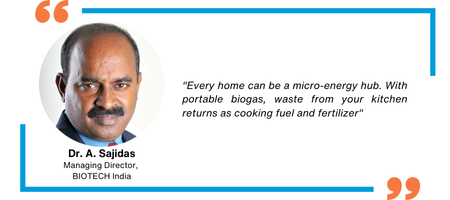
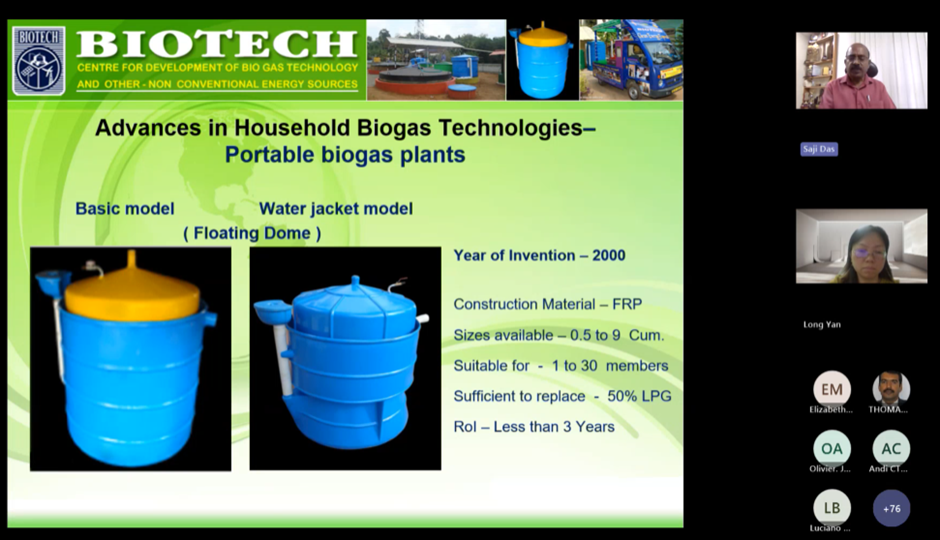
Dr. Sajidas presented BIOTECH India’s pioneering work on fiberglass-based portable biogas systems. Designed for both rural and urban households, these digesters are lightweight, easy to install, and remarkably efficient. The systems allow families to transform organic waste into usable energy and organic fertilizer, reducing dependence on LPG and mitigating landfill pressure.
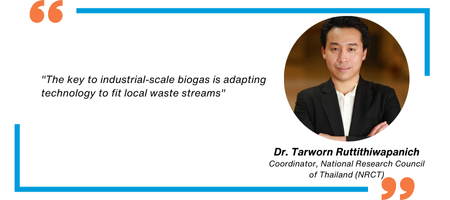
In contrast, Thailand’s focus was on scaling biogas solutions at the industrial level. Dr. Ruttithiwapanich of BIOTEC Thailand emphasized the importance of customizing systems to local agricultural and industrial contexts, such as cassava starch and rubber processing. Thailand’s bioenergy roadmap aims to increase renewable energy use to 30% by 2037, with biogas as a central pillar.
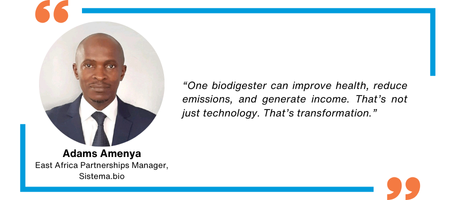
East Africa’s story was grounded in community impact. Representing Sistema.bio, Mr. Adams Amenya shared how biodigesters are changing the lives of smallholder farmers across Africa. Sistema.bio’s modular digesters not only provide clean cooking gas but also produce rich organic fertilizer, improving both nutrition and income at the household level. Their digital monitoring systems also track emissions reductions, tying local impact to global climate goals.
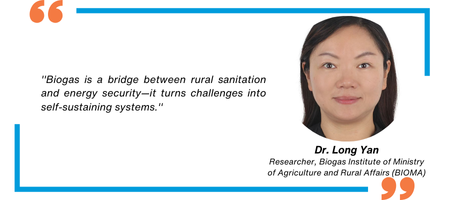
Long Yan from BIOMA, China brought in a systems-level perspective, showcasing large-scale biogas stations that provide fuel and fertilizer for entire communities. These projects integrate waste from livestock and toilets, offering a circular approach to rural development. Dr. Yan emphasized the role of policy, capacity-building, and South-South collaboration in scaling biogas solutions. From Samoa to Argentina, BIOMA has been exporting not just technology, but an ecosystem of training, standards, and partnerships.
The webinar concluded with a powerful reminder: clean cooking is no longer a peripheral issue. It sits at the intersection of climate, health, environment and development. Biogas, in its many forms, is uniquely positioned to address all three.
As momentum grows, the CECC and its partners continue to promote high-tier clean cooking solutions like ethanol, electricity, pellets, and of course, biogas. The challenge now is to scale what works, adapt it to new contexts, and ensure that no household or community is left behind in the clean energy transition.
Watch the full webinar recording here: Webinar Recording: Innovations in Biogas Technology for Clean Cooking
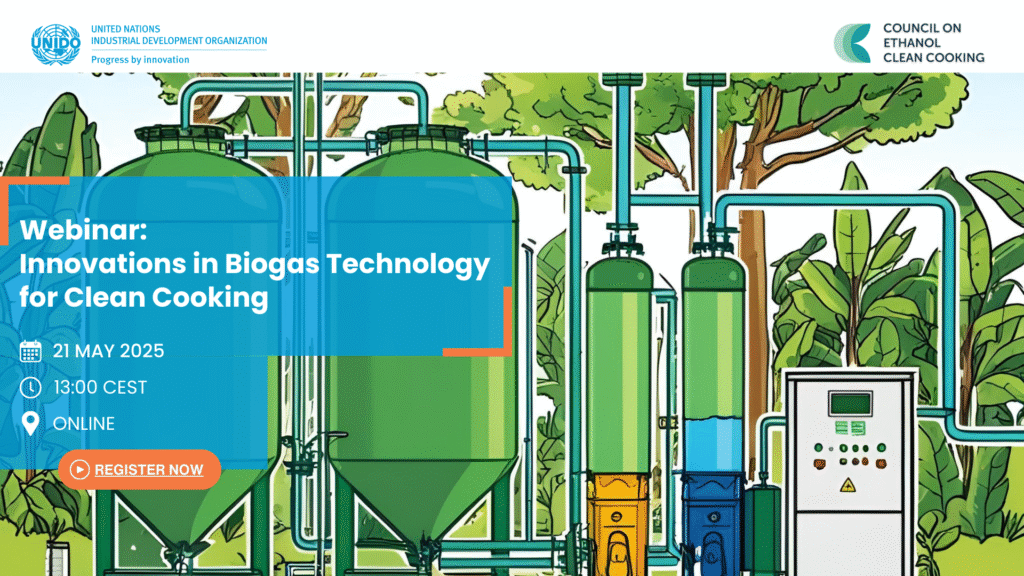
The United Nations Industrial Development Organization (UNIDO) and the Council on Ethanol Clean Cooking (CECC) invite you to a webinar on “Innovations in Biogas Technology for Clean Cooking.” This session will spotlight recent advances in biogas technologies designed for household and community-level applications. Experts from across the biogas sector will present innovative approaches to system design, feedstock utilization, and deployment models that enhance performance, affordability, and user adoption. The webinar will also examine enabling policy environments and investment opportunities to support the scale-up of biogas for clean cooking in diverse contexts.
Save the date: The webinar will take place on May 21th at 13:00 CEST.
Kasulu & Buhigwe, Kigoma Region, Tanzania—April 10-11, 2025
Author: Alusaria Verande Nkya.
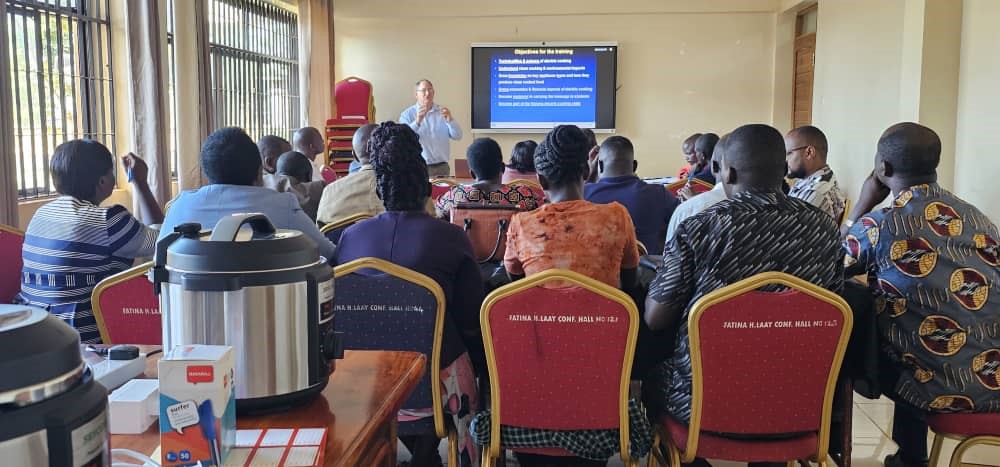
In a groundbreaking move to transform cooking practices across Tanzanian households, 50 teachers from nine secondary schools in Kigoma underwent transformative training on electric clean cooking stoves. The initiative, spearheaded by the United Nations Industrial Development Organization (UNIDO) in collaboration with SIDO and TANESCO, aims to empower both educators and students while promoting healthier, more eco-friendly, and cost-effective cooking methods.
A Recipe for Change: Why Clean Cooking Matters
More than 80% of Tanzanian households still depend on firewood and charcoal, causing deforestation, indoor air pollution, and significant carbon emissions. But there’s good news: Kigoma is now connected to the national power grid, benefiting from the Julius Nyerere Hydropower Station’s 2,000 MW surplus. This untapped energy can power cleaner cooking solutions for 4-5 million households—a recipe for environmental and health transformation.
Blending Theory with Practice
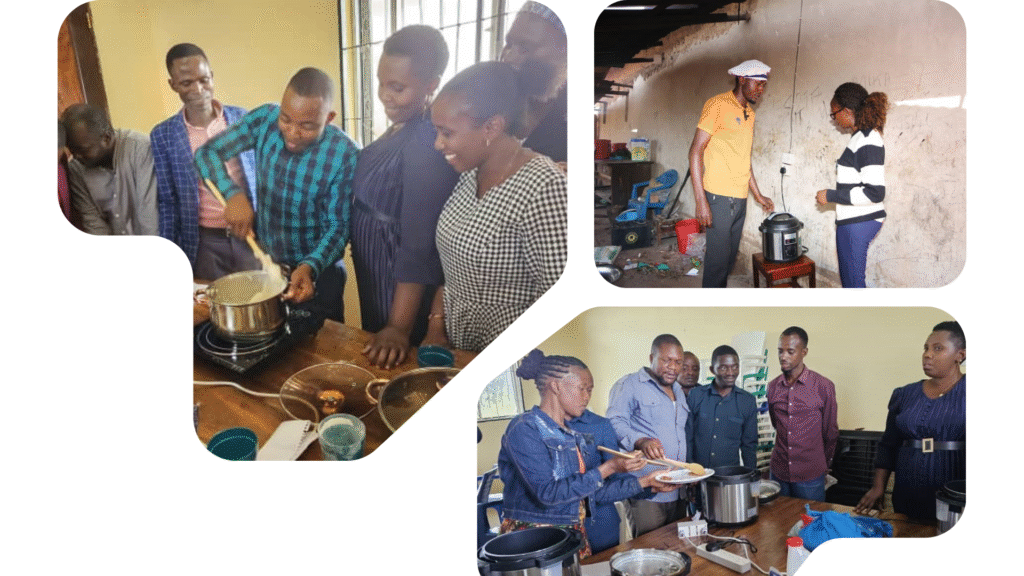
Over the course of two days, teachers combined classroom knowledge with hands-on training. Using Electric Pressure Cookers (EPCs) and Induction Hobs, participants discovered the impressive efficiency, safety, and speed these appliances offer. Preparing staple dishes such as ugali and beans revealed how little energy these stoves consume—e.g., cooking beans in just 60 minutes used a mere 0.26 kWh, costing only Tsh 100!
This hands-on learning experience not only highlighted the cost-saving potential of electric cooking but also delved into scientific concepts like energy, power, and heat transfer, connecting the dots between science lessons and real-life applications.
From Schools to Communities: A Ripple Effect of Change
The story doesn’t end in the classroom. On April 24, UNIDO will equip all 10 participating schools with EPCs, Induction Hobs, and energy meters, alongside detailed user manuals. Teachers will incorporate electric cooking into the science curriculum, ensuring students not only learn about sustainability but actively practice it in their lives.
Teachers will also track progress by submitting monthly reports on their students’ outreach efforts. As students spread this knowledge to their homes, this initiative is expected to ignite a region-wide transformation in cooking habits.
“Safety First!” Teachers Engage, Question, and Inspire
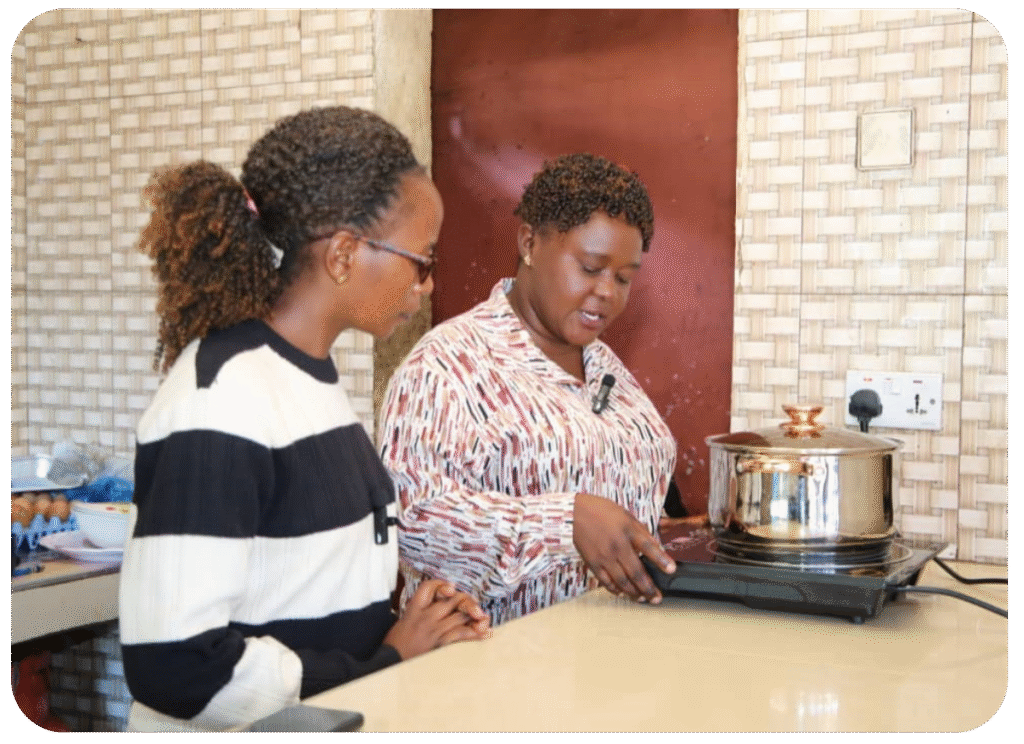
During the training, safety was a top concern for the teachers, many of whom had never worked with electric cooking appliances before. Facilitators addressed these concerns by emphasizing key safety features, such as automatic temperature controls. The response? Enthusiasm! Teachers are already calling for extended sessions to delve deeper into this critical topic.
A Unified Effort for Clean Cooking
The movement doesn’t stop here. During the training, safety was a top concern for the teachers, many of whom had never worked with electric cooking appliances before. Facilitators addressed these concerns by emphasizing key safety features, such as automatic temperature controls.
With teachers now acting as champions of this clean cooking revolution, Kigoma is setting the stage for a cleaner, healthier, and more sustainable future. This initiative is not just transforming the way we cook but it’s also showing how education and community engagement can spark meaningful, lasting change.
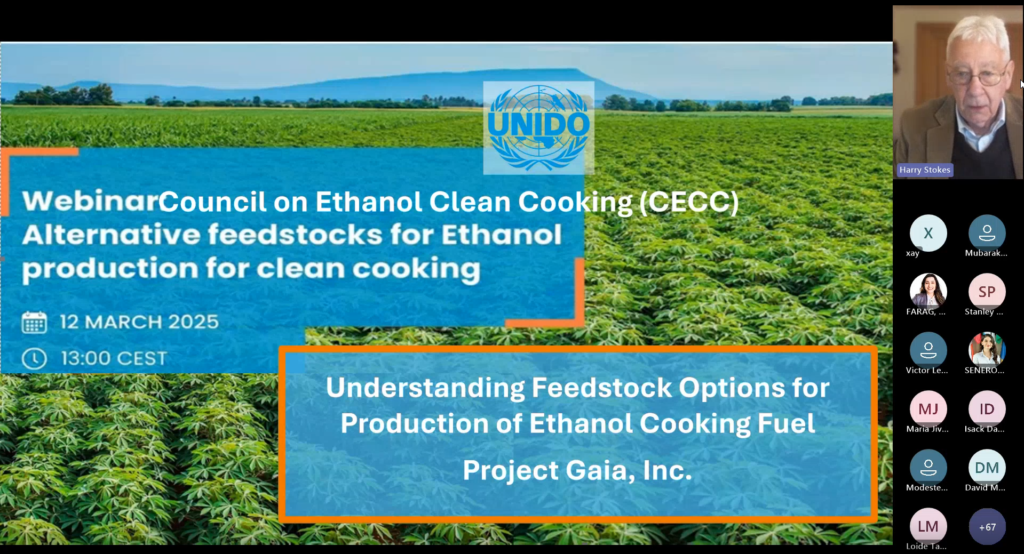
Ethanol has emerged as an important renewable fuel for clean cooking, offering a sustainable alternative to traditional biomass and imported fossil fuels. Its adoption has the potential to significantly reduce indoor air pollution, lower greenhouse gas emissions, and enhance energy security, economic development, and gender empowerment, particularly in developing countries.
However, the sustainability and scalability of ethanol for clean cooking largely depend on the availability, affordability and accessibility of ethanol for the consumers. In that context local production and availability of alternative and sustainable feedstocks to sugar cane, that do not compete with food security is crucial. Currently, major ethanol clean cooking initiatives in countries like Kenya, Tanzania, Uganda, Ghana, and others depend primarily on molasses from sugar industries. But for large-scale adoption of ethanol as a clean cooking fuel, it is necessary to explore diverse feedstocks, such as cassava, sweet sorghum, cocoa waste, cashew apple and invasive species such as water hyacinth. Each feedstock presents unique economic, technical, and environmental opportunities and challenges.
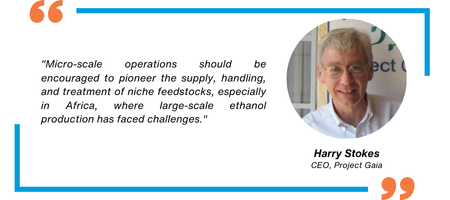
Harry Stokes emphasized the importance of local production of enzymes to reduce costs and improve ethanol processing efficiency. He also highlighted carbon credit mechanisms as a potential revenue source for ethanol projects, helping improve financial viability while promoting sustainability.
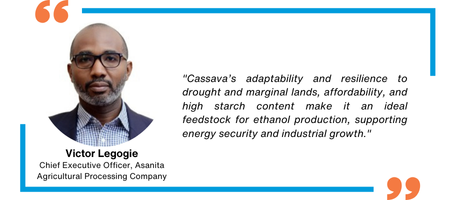
Victor Legogie shared insights from his 50,000-liter-per-day bioethanol project in Nigeria, which uses cassava as its primary feedstock. While cassava is widely cultivated and high in starch, he noted logistical challenges such as its high moisture content (70%), which affects storage and transport costs. His company aims to integrate ethanol production with biomass power, carbon capture, and animal feed production to create a zero-waste system.
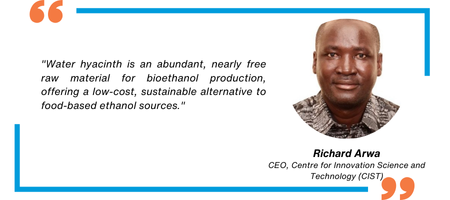
In Kenya, water hyacinth is an invasive species that clogs Lake Victoria, disrupting local ecosystems and livelihoods. Richard Arwa’s initiative converts water hyacinth into bioethanol, utilizing locally produced enzymes to break down cellulose into fermentable sugars. His micro-distillery model achieves 95% water recycling efficiency, demonstrating that small-scale ethanol production can be both economical and sustainable. His model of micro-distillery and fuel dispensing system with IOT tracking systems is poised for scaling.
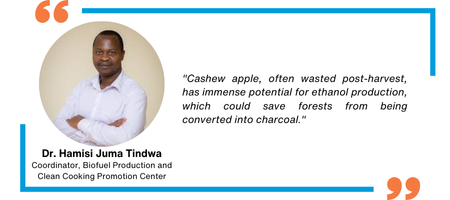
Hamisi Juma Tindwa discussed how Tanzania produces 2.3 million tonnes of cashew apples annually, yet most of it rots unused. His research aims to develop efficient collection and processing methods to convert this wasted resource into ethanol for clean cooking. Due to the short lifespan of cashew apples (around 70 hours before fermentation begins), innovative preservation techniques will be essential to make cashew-based ethanol a viable solution.
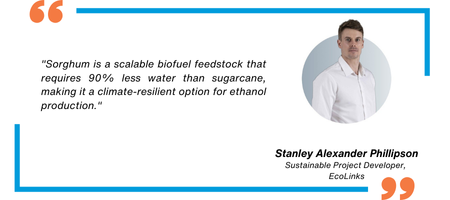
Stanley Alexander Phillipson explained that sweet sorghum is ideal for semi-arid regions due to its low water requirements and dual-purpose use—providing both grain for food and stalks for bioethanol. He stressed the importance of farmer adoption, irrigation efficiency, and sustainable land use practices to maximize yields and reduce costs.
A key takeaway from the webinar was the crucial role of policy and investments in scaling alternative ethanol feedstocks. Strong regulatory frameworks, financial incentives, and strategic partnerships are essential to unlocking the full potential of feedstocks like water hyacinth, cashew apples, and sweet sorghum.
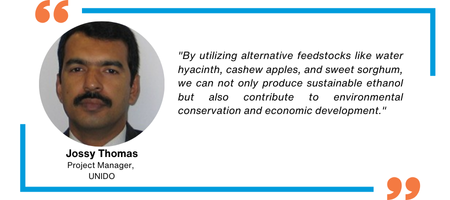
Summing up the discussion, Jossy Thomas (Project Manager, UNIDO) emphasized the broader impact of these efforts:
This webinar showcased innovative approaches to ethanol production and the importance of alternative feedstocks in making clean cooking more accessible and sustainable.
Watch the full webinar recording here: Webinar Alternative Feedstocks for Ethanol Production for Clean Cooking-20250312_134545-Meeting Recording.mp4
