This article is written by Shakeela Koorattu Thodi.
How Greenergy is combining affordable stoves, fuel access and customer support to drive ethanol cooking adoption
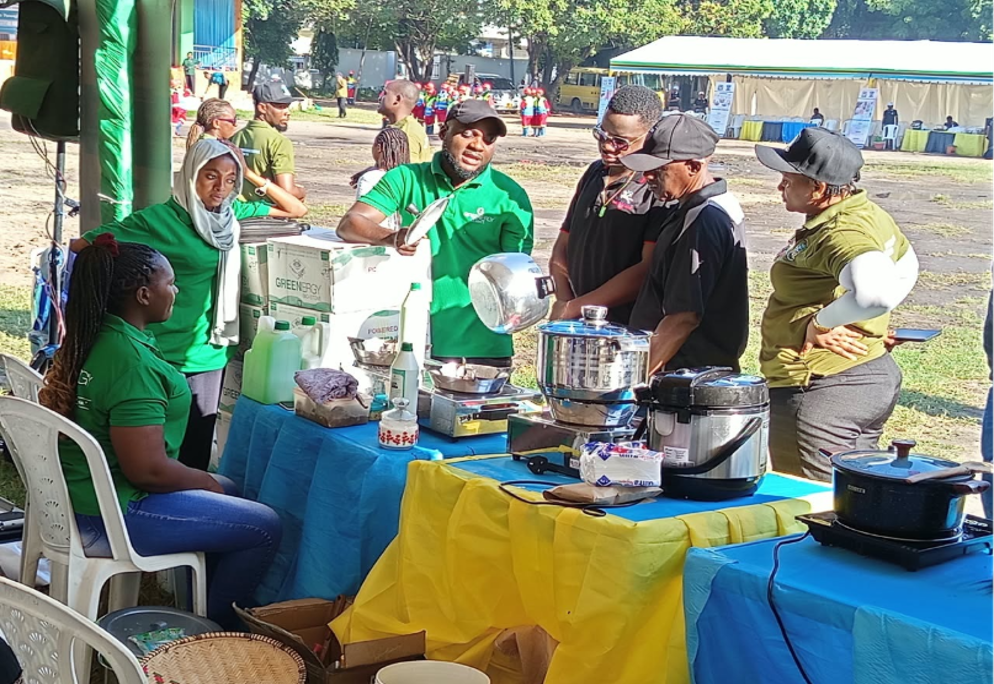
In Dar es Salaam, a growing number of households are discovering a cleaner and more convenient way to cook. Through affordable ethanol cookstoves, reliable fuel access and dedicated customer support, Greenergy Climate Tanzania Limited is helping families transition away from charcoal and adopt cleaner cooking solutions.
Established in 2024 by Uganda-based Bukona Agro Processors Limited, Greenergy Climate Tanzania Limited is building on Bukona’s experience in developing an ethanol cooking market in Uganda and bringing that model to Tanzania. Supported by UNIDO through the Global Environment Facility (GEF-6) project on ethanol cooking in Tanzania, the company began commercial operations in Dar es Salaam in 2025.
Recognizing that successful market development requires more than introducing a new product, Greenergy is investing in the fuel distribution networks, customer-support services and outreach activities needed to make ethanol cooking a practical option for everyday use. By reducing the upfront cost of cooking equipment, expanding access to fuel and supporting customers throughout their transition, the company is helping to lay the foundations for a sustainable clean-cooking market in Tanzania. Its experience demonstrates how lessons from a successful regional business can be adapted to a new market and how a combination of affordability, accessibility and customer engagement can accelerate the adoption of clean cooking solutions.
Building a new clean cooking market requires far more than introducing a product. Households need affordable equipment, reliable access to fuel and confidence that the technology will meet their everyday cooking needs.
Having successfully developed an ethanol cooking market in Uganda, Bukona Agro Processors Limited established Greenergy Climate Tanzania Limited in 2024 to expand its operations into Tanzania. Entering a new market, however, presented several challenges, including building local distribution networks, reducing the upfront cost of cooking equipment and encouraging households to adopt an unfamiliar cooking solution.
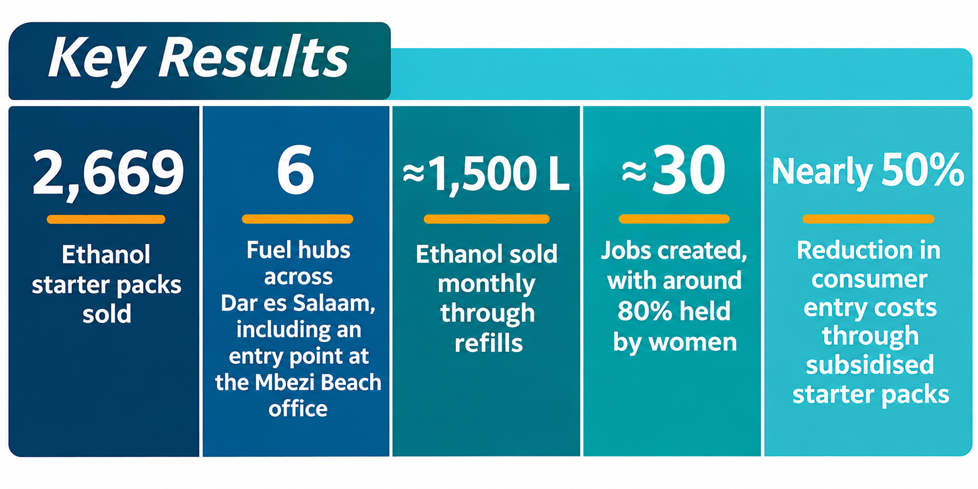
With support from UNIDO, Greenergy launched commercial operations in Dar es Salaam in April 2025. The company initially imports ethanol fuel and cooking equipment from Uganda while simultaneously developing local sales, fuel distribution and customer-support systems to create the conditions for sustained adoption of ethanol cooking.

For many households, the cost of purchasing a new stove can be a significant obstacle to switching to cleaner cooking solutions. To lower this barrier, Greenergy introduced a subsidized starter pack consisting of a single-burner ethanol stove and three litres of fuel. The package is offered at approximately TZS 55,000 (USD 21.15), compared with its standard retail price of about TZS 105,000 (USD 40.38).
By reducing the initial investment required, the starter pack allows households to experience ethanol cooking first-hand. This introductory support is complemented by fuel-refilling services, distribution networks and practical user guidance designed to encourage continued use beyond the initial purchase.
Making ethanol cooking accessible requires more than supplying stoves. Households also need dependable fuel availability, information on how to use the technology and access to ongoing customer support.
To meet these needs, Greenergy has established six fuel hubs across Dar es Salaam, in addition to a distribution point at its Mbezi Beach office. Cooking demonstrations and community outreach activities help familiarize potential users with ethanol cooking, while WhatsApp messaging, telephone follow-ups, instructional videos and selected home-delivery services support customers after they make their first purchase.
Existing customers also contribute to expanding awareness of ethanol cooking through Greenergy’s referral programme. Users who successfully introduce new customers can receive either a cash reward or one litre of ethanol fuel.
Together, these initiatives are helping to create a supportive clean cooking ecosystem that makes ethanol cooking more affordable, accessible and convenient, while encouraging long-term adoption among households.
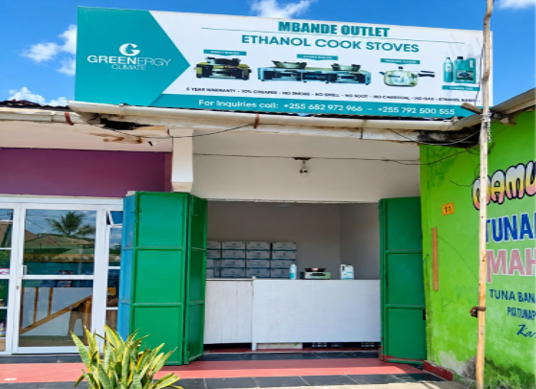
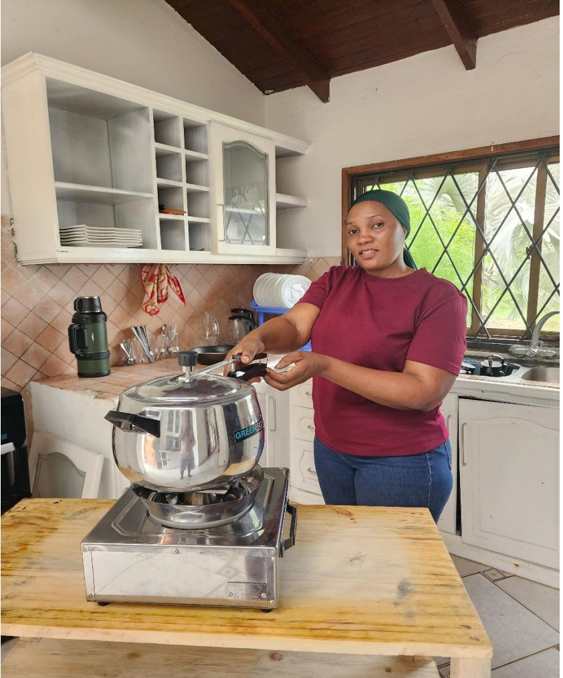
For many households, the value of ethanol cooking extends beyond reduced fuel costs. Time savings, convenience and improved access to opportunities are equally important benefits.
Brittany, a customer in Dar es Salaam, says she has largely replaced charcoal with ethanol and now uses it alongside LPG. In addition to reducing her household cooking expenses, she has earned supplementary income through Greenergy’s referral programme.
Another customer, Anita, recalls the time and effort previously required to purchase charcoal. With ethanol fuel now delivered directly to her home, cooking has become both easier and more affordable. The time saved has enabled her to enrol in a leadership training programme, demonstrating how access to modern cooking solutions can create broader social and economic opportunities.
These experiences illustrate how clean cooking technologies can improve daily life, not only by providing a safer and more convenient cooking option, but also by helping households save time, reduce costs and pursue new opportunities.
Brittany and Anita’s experiences illustrate how the benefits of ethanol cooking extend beyond convenience and cost savings. Both have replaced charcoal with ethanol, alongside LPG or electricity, and report cleaner kitchens without the smoke and soot associated with charcoal use. These household-level improvements highlight the immediate advantages of cleaner cooking. As more families transition away from charcoal, wider adoption of ethanol could also help reduce pressure on forest resources and support broader environmental and climate objectives.
Greenergy’s experience demonstrates that expanding access to clean cooking requires more than making new technologies available. Success depends on creating an ecosystem that combines affordable products, reliable fuel supply, consumer awareness and responsive customer support.
While continued monitoring will be important to assess long-term adoption, the company’s early experience shows how targeted market-development support can help households overcome barriers to switching fuels. As Tanzania seeks to expand access to modern energy services, Greenergy’s approach offers valuable lessons on how private-sector innovation and customer-centred solutions can support the transition to cleaner cooking at scale.
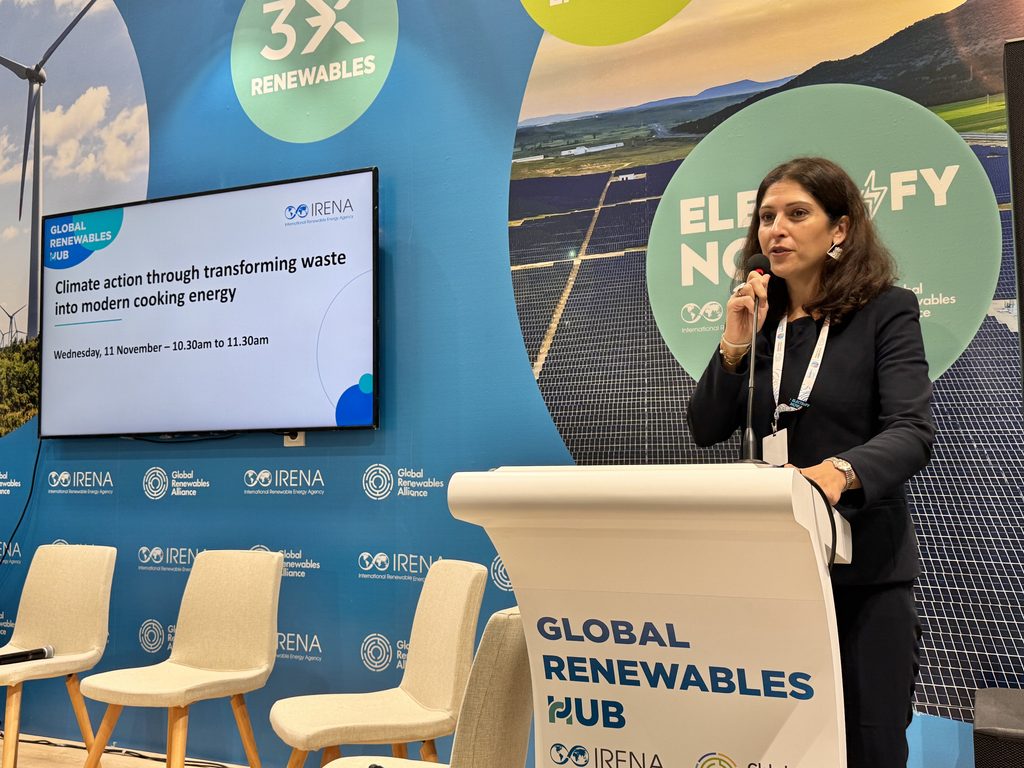
Antalya, Türkiye, 11 November 2026 – The United Nations Industrial Development Organization (UNIDO) highlighted the role of green cooking technologies in advancing climate action, sustainable industrial development and universal access to clean energy during a high-level session at the 31st United Nations Climate Change Conference (COP31).
Held at the Global Renewables Hub, the session, “Climate action through transforming waste into modern cooking energy,” brought together representatives from international organizations, development finance institutions and the clean cooking sector to explore practical solutions for scaling waste-derived bioenergy and mobilizing investment in sustainable cooking technologies.
Organized in collaboration with the International Renewable Energy Agency (IRENA), the World Bioenergy Association (WBA) and partners, the discussion focused on the potential of converting agricultural residues and organic waste into modern cooking fuels, including biogas, ethanol and advanced solid biomass.
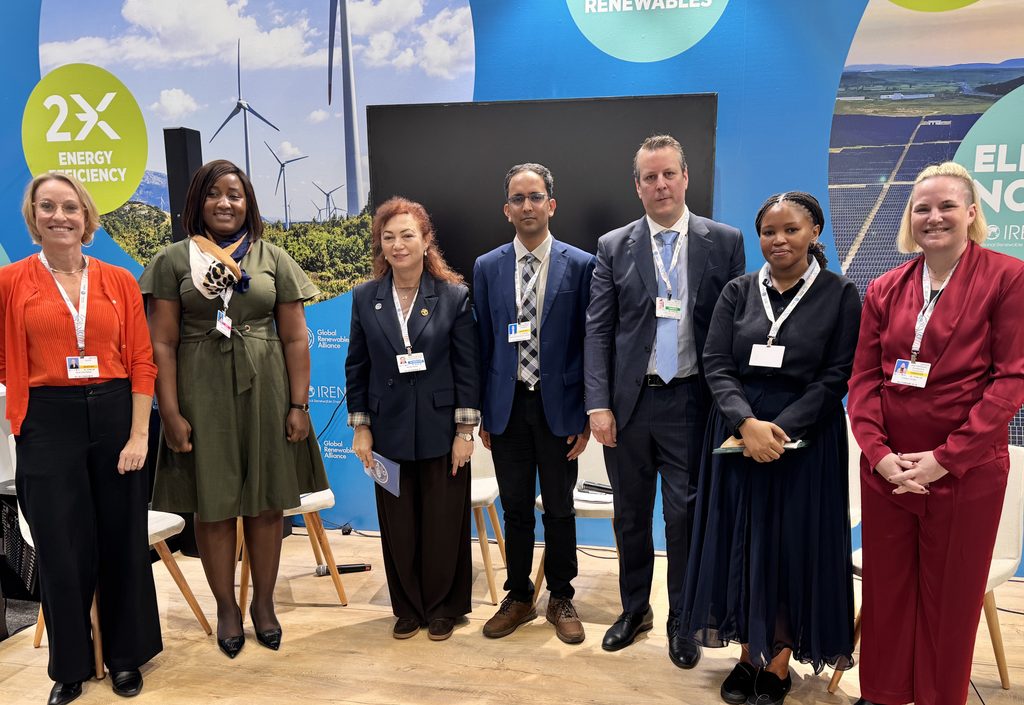
The session included opening remarks by Rana Ghoneim, Director of UNIDO’s Division of Energy and Climate Action, followed by a panel discussion featuring Ntsebo Sephelane, Associate Industrial Development Officer at UNIDO, alongside representatives from international organizations, financial institutions and the clean cooking sector.
The session provided an opportunity to highlight UNIDO’s approach to green cooking as a pathway that connects renewable energy access with local industrial development, resource efficiency and climate change mitigation.
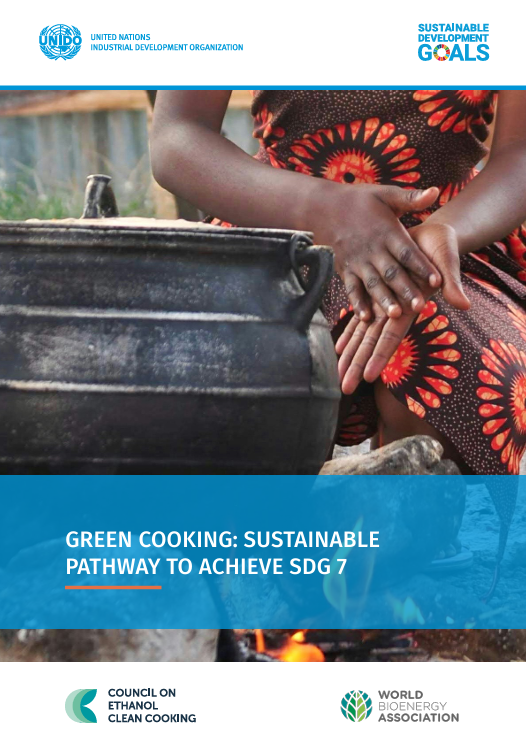
A central focus of UNIDO’s contribution was the publication Green Cooking: Sustainable Pathway to Achieve SDG 7, developed by UNIDO in collaboration with the World Bioenergy Association and the Council on Ethanol Clean Cooking (CECC).
The publication explores the opportunities for scaling three renewable cooking solutions: biogas, ethanol and sustainably produced modern solid biomass fuels, particularly in sub-Saharan Africa. It examines available technologies, emerging business models, market development and the policy and financial conditions required to accelerate adoption.
The report demonstrates how green cooking can extend beyond household energy access to create economic opportunities along local value chains. Biogas technologies can transform organic waste into cooking fuel and organic fertilizer, while ethanol production can strengthen links between agriculture, agro-processing and renewable energy markets. Modern biomass pellets, combined with efficient cooking technologies, can support local manufacturing and more sustainable use of biomass resources.
Together, these solutions offer opportunities to reduce dependence on imported fossil fuels, strengthen energy security, promote entrepreneurship and create employment, while contributing to climate mitigation and progress towards Sustainable Development Goal 7 (SDG 7).
Despite their potential, green cooking technologies continue to face significant barriers to large-scale deployment. The UNIDO publication identifies limited investment, fragmented supply chains, high upfront equipment costs, insufficient technical capacity and the lack of coordinated policy frameworks among the main challenges.
Addressing these barriers requires an integrated approach that combines technology deployment with market development, innovative financing, institutional capacity-building and supportive regulatory environments.
The COP31 discussion explored how climate finance, including carbon finance, can strengthen the commercial viability of clean cooking projects, improve affordability and attract additional public and private investment.
The session also highlighted the importance of cross-sector collaboration, particularly among the energy, agriculture, waste management and climate sectors, to unlock the broader environmental and economic benefits of waste-derived bioenergy.
UNIDO’s participation reinforced the importance of positioning green cooking within broader sustainable development and industrial transformation agendas.
By promoting locally available renewable energy resources, supporting sustainable business models and strengthening local production capacities, green cooking can contribute to more resilient economies and inclusive industrial development.
The session also featured IRENA’s publication, Scaling Domestic Biogas to Meet Cooking Energy Demand and Climate Ambitions, complementing UNIDO’s work by examining opportunities to expand domestic biogas deployment.
Through its collaboration with IRENA, the World Bioenergy Association and other partners, UNIDO continues to advance integrated solutions that link clean energy access, sustainable industrialization and climate action.
Green Cooking: Sustainable Pathway to Achieve SDG 7
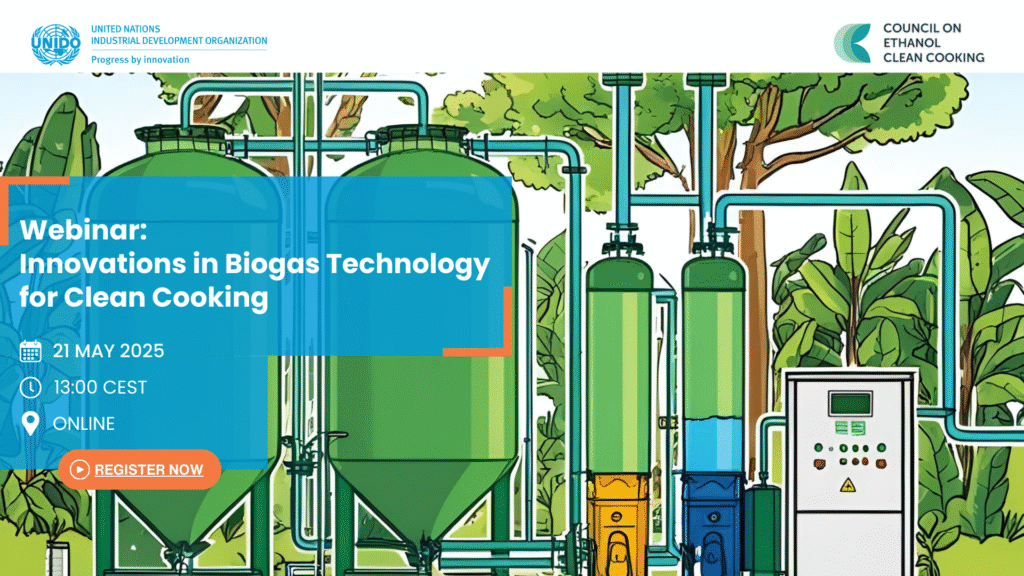
The United Nations Industrial Development Organization (UNIDO) and the Council on Ethanol Clean Cooking (CECC) invite you to a webinar on “Innovations in Biogas Technology for Clean Cooking.” This session will spotlight recent advances in biogas technologies designed for household and community-level applications. Experts from across the biogas sector will present innovative approaches to system design, feedstock utilization, and deployment models that enhance performance, affordability, and user adoption. The webinar will also examine enabling policy environments and investment opportunities to support the scale-up of biogas for clean cooking in diverse contexts.
Save the date: The webinar will take place on May 21th at 13:00 CEST.